My hometown of Nashville got hammered by a gnarly winter storm this weekend which left hundreds of thousands of people without power. No heat, no light, and limited access to food.
Granted, we had plenty of warning, but not everyone had the resources to just go stay at a hotel and wait it out.
My wife and I decided to stay at home with our elderly dog feeling confident we would be fine if we lost power. Well, we lost power, and it got cold fast. Fortunately for us, our neighbors were going to a hotel and said we could stay at their place which had a gas fireplace and a gas range. The fireplace kinda helped. Cooking on their gas range was far superior to using my little backpacking stove.
So we camped out for a couple of days. No light, no TV, limited internet usage because we had no good way to charge our phones. We read and talked and took walks with the dog in 12º temps. We were fine compared to many and we always had the option of going to a hotel if things got bad enough.
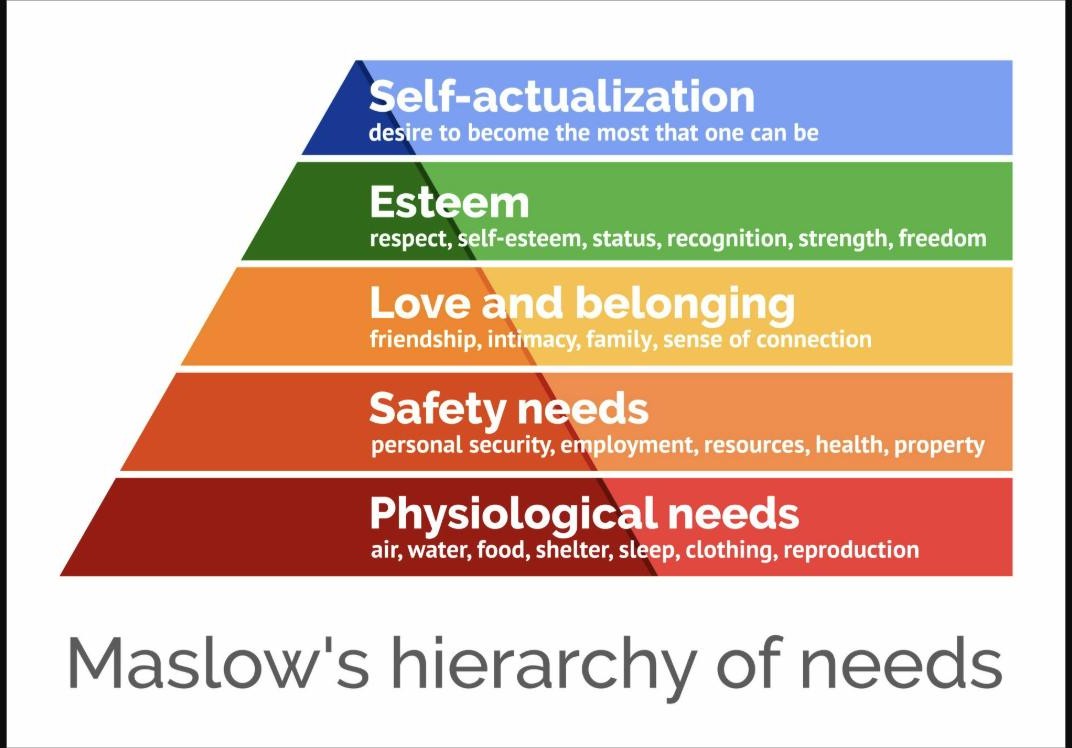
But here’s something I noticed over the weekend: I dropped quickly to the bottom of Maslow’s Hierarchy. Granted, I am fortunate enough and have worked hard at building a life where I spend a majority of my time at the top of that pyramid, occasionally dipping down when I get scared. But during this storm, I was almost solely focused on warmth, food prep, and eking out any comfort we could find.
Any spare energy I had was spent on making sure our home (and our neighbors home) was OK, checking in on neighbors, and checking in with family/friends all over town who were experiencing the same problems.
Sitting there in the cold, rationing phone battery, I realized I’ve seen this exact dynamic play out in every struggling company I’ve worked with. When we feel forced to focus on survival, our ability to access higher levels of thinking (moving from the amygdala to the frontal cortex) is hugely diminished.
Herbert Simon’s research on “attention scarcity” shows that when we’re worried about immediate survival needs, our cognitive bandwidth narrows dramatically. We can’t hold multiple scenarios in mind, we discount the future heavily, and we default to the most obvious (not best) solutions. Eldar Shafir and Sendhil Mullainathan call this the “scarcity trap”—when you’re in it, you can’t think your way out because the scarcity itself consumes the mental resources you’d need to escape it.
So how can we access the upper regions of the pyramid when our mind is biologically hijacked to just “get by”?
- Practice Acceptance: Right now, it’s like this. Tomorrow will be different. You're not failing—your brain is doing exactly what it's designed to do in threat.
- Name It. Just like in your mindfulness practice, naming an emotion helps reduce some of the overwhelm we experience with these situations. It won’t make everything better, but at least you’re getting clear about what you’re working with.
- Small Wins. What are 2-3 little things you can do to take care of yourself? A warm cup of coffee, a walk around the block, a quick call to a friend. Small efforts can have an outsized effect in moments of suffering.
- Change The Conditions: Ultimately, we have to change the state of things or our bodies and minds will always be locked into a state of dealing with the base necessities. This could be quitting the job, leaving the marriage, or letting go of that project. Something radical will have to change in order to regain access to higher level thinking.
Our power was restored yesterday morning. We still spent the day cleaning house, clearing storm debris, and helping neighbors, but at least we had hot showers and lights. Today, I went back to the gym, I’m working on a laptop with WiFi, and just like that, all my basic needs are met and I’m free to float back up to the top of Maslow’s Hierarchy.
There’s a strong case here for working hard so you can afford better options when disaster strikes. You can bet your ass I’m getting a quote on a whole-house generator, and thinking about some home improvements that make weathering a storm just a little easier.
So what’s the professional equivalent of a whole-house generator? What do you build when times are good so you’re not operating from threat when they’re not?